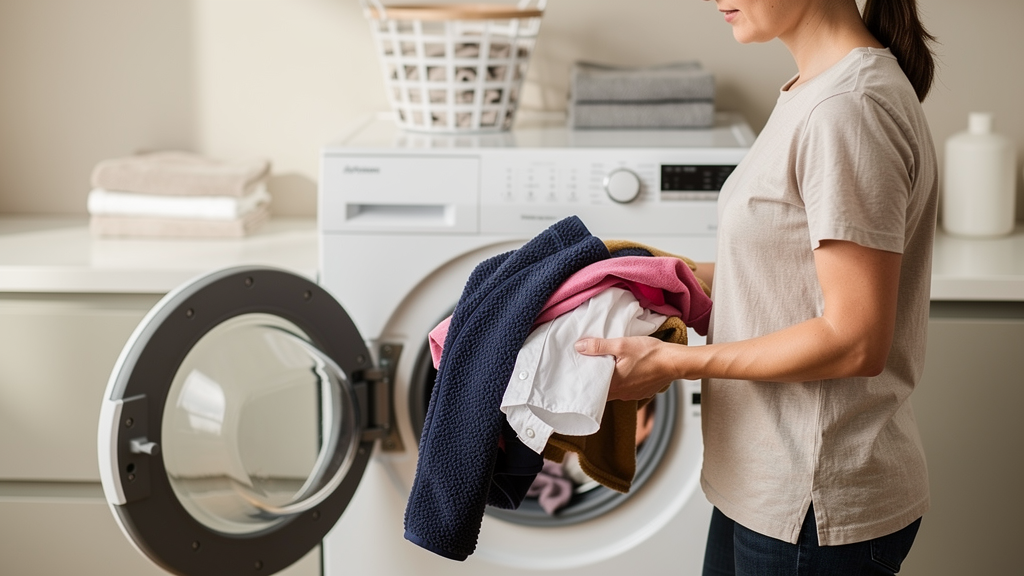
A wash can carry tiny fibres from clothes into the wastewater.[1] Polyester and other synthetic fibres are plastic; cotton and other non-plastic textiles shed fibres too.[1][4] That distinction matters if you are trying to reduce microplastics, rather than every kind of textile fibre.[1][2] The most useful changes are fairly ordinary: wash when clothes need it, use an appropriate cooler, shorter programme where the care label and cleaning task allow, and run a sensible load rather than washing a couple of items alone.[1] A laundry filter can reduce fibres in the drain water, but its published performance is not a universal percentage.[2][3]
What actually leaves the machine?
The answer depends on the clothes, the machine and how the researchers collect the effluent.[1][2] In one study, investigators washed real mixed loads of used clothing collected from UK households, collected the wash and rinse water, then measured the mass of fibres retained by a fine sieve.[1] They also examined a sample of the collected fibres to identify materials.[1] Most fibres in those mixed loads were not synthetic.[1] A mass of all shed fibres should therefore not be presented as a mass of plastic.[1]
Another experiment deliberately washed polyester fleece blankets, making it useful for testing a filter under controlled conditions, but much less representative of a typical basket of mixed laundry.[3] Other tests washed repeated loads of cotton and polyester garments in domestic front-loading machines.[4] These experiments answer different questions. A count of fleece fibres captured in one machine cannot be transferred directly to a different garment, wash programme or household.
Fibres escaping the washer do not necessarily go straight to a river.[2][3] They may enter a wastewater treatment system, where some are removed from the water but can remain in treatment sludge.[2][3] Capture at the machine reduces the material entering that system; it is not a direct measurement of environmental or human health outcomes.[2][3]
Do cooler, quicker washes make a difference?
In the UK mixed-load study, the researchers compared a 15°C, 30-minute programme with an 85-minute programme at 40°C.[1] The cooler, shorter washes produced less collected fibre mass, about 30% less in this comparison.[1] They also found that larger, reasonably filled loads shed less fibre per kilogram of fabric than small loads.[1] Both findings concern the programmes, loads and measurement method tested, not a guaranteed reduction for every washer or textile.[1]
That experiment changed temperature and duration together.[1] It cannot tell you exactly how much of the difference came from either setting alone.[1] The study was sponsored by Procter & Gamble, and two authors were employees, a relevant disclosure rather than a reason to discard the measurements.[1] Other results on detergents and fabric softeners differ between studies, so there is no sound basis here for buying a particular laundry additive as a microfibre fix.[1]
A cold quick cycle is not right for every job. Follow the garment label and your machine's guidance, and use a suitable hygiene programme where cleaning needs demand it. The study measured fibre release, not whether every soiled item was adequately cleaned on its shorter cycle.[1]
What about bags, balls and external filters?
Products marketed for the same purpose do not perform alike.[2][3] One laboratory study using polyester fleece blankets found an external Lint LUV-R filter reduced fibres in effluent by 87% by count, while an in-drum Cora Ball reduced them by 26% by count.[3] A separate study comparing six devices with a mixed load measured mass in outgoing wastewater.[2] Its prototype XFiltra achieved about 78% reduction, a Guppyfriend bag about 54%, and the Lint LUV-R about 29% under that study's conditions.[2] Those Lint LUV-R results look contradictory until you check the tests: one counted fibres from fleece blankets and the other weighed fibres from a mixed wash.[2][3] Neither is a dependable promise for your machine.[2][3]
A third study washed cotton and polyester garments with and without filters in replicated domestic machines. It found reductions in effluent fibre mass for the tested configurations, but fibres still escaped.[4] Together, these studies support the limited claim that some devices can reduce washer discharge. They do not establish that all filter designs work equally well, that every captured fibre would otherwise have reached the sea, or that installing one improves a person's health.[2][3][4]
If you are considering a device, look for an independent test on a similar washer and load. Check whether the claimed percentage refers to fibre count or mass, the size range measured, and whether the device sits in the drum or filters the outgoing water.[2][3] Follow its maintenance instructions. Put collected lint in household rubbish rather than rinsing it back into the drain; otherwise the point of capturing it is rather lost. Check local disposal rules for any replaceable cartridge.
A workable laundry routine
- Wash clothes when they need cleaning, not simply because they have been worn once. Fewer washes mean fewer occasions for fibres to enter laundry effluent, though the studies here do not quantify a household's annual saving.[1][2]
- Where suitable for the fabric and cleaning task, try a cooler, shorter programme. The measured reduction in the mixed-load experiment was for a specific pair of programmes, not a universal 30% rule.[1]
- Fill the machine sensibly without overloading it. The UK experiment found lower fibre release per kilogram in its larger loads, but cramming clothes in can compromise washing and is not what the researchers tested.[1]
- Treat a bag or filter as an optional extra, not a licence to buy and wash more fleece. Ask for comparative effluent measurements before trusting a percentage on a packet.[2][3][4]
Bottom line: This is chiefly an environmental-release question. The experiments measured fibres in laundry water and how washing choices or devices changed that output.[1][2][3] They did not test whether these choices reduce human exposure or prevent disease.[1][2][4] For a different exposure route, read our guide to microplastics in indoor air. For the broader distinction between detecting plastic and proving harm, see what the exposure research actually says.